 Notes on making a room work
Planning a Room
Can people talk without turning their heads?
Seating along three walls with a gap in the middle is the single most common fault in a large room, and it is a conversation problem rather than a decorating one.
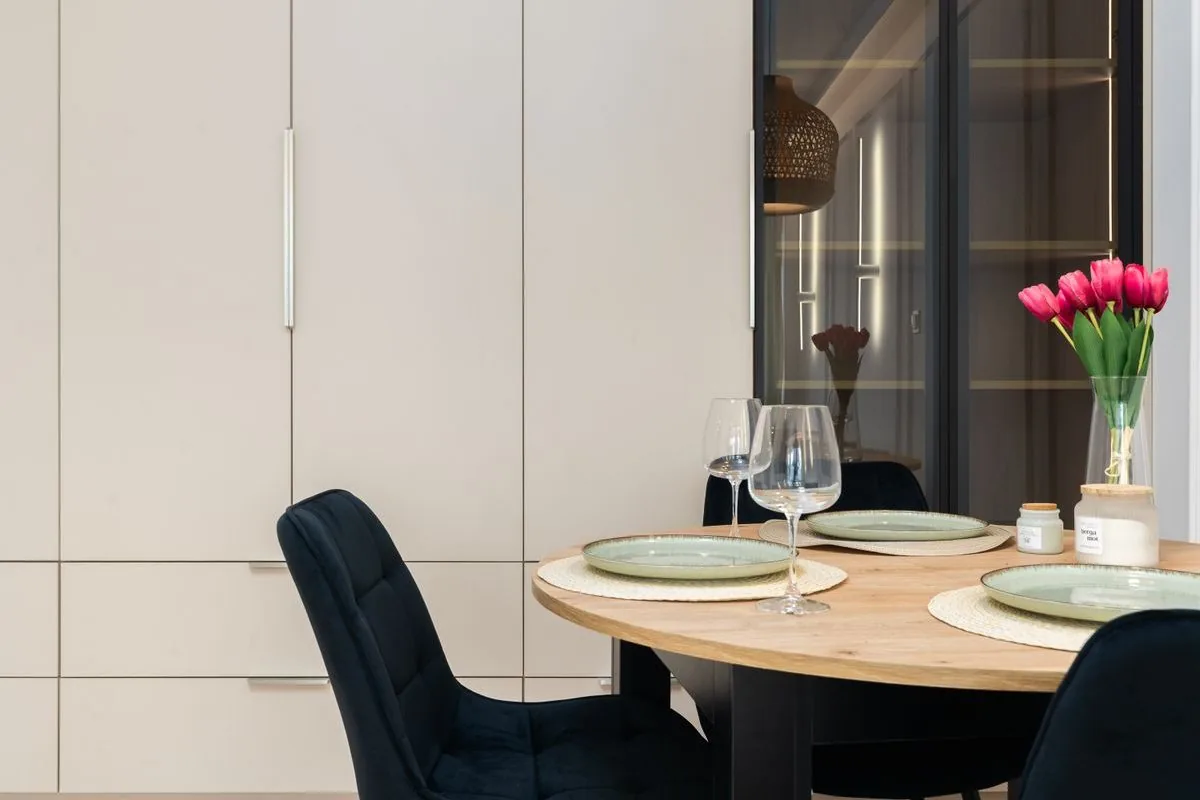
Two sofas facing each other, or a sofa with two chairs angled toward it, will always work better than three seats pushed back against three walls. The distance across should be close enough for ordinary speech, which in practice means under about three metres between facing seats.
The gap in the middle happens because people push furniture to the walls to make a room feel bigger. It does the opposite: it creates a void nobody occupies and pushes everyone to the edges. Pulling seating in from the wall, even by twenty centimetres, changes how a room reads.
Every seat needs somewhere to put a drink down within arm's reach without standing up. That is a functional requirement rather than a styling one, and it is the reason side tables exist. A room where two of the four seats have nowhere to put a cup will always have the same two seats used.
Traffic routes should not cross the conversation. If the path from the door to the kitchen runs between two facing sofas, the room will feel unsettled and nobody will be able to say why.
In small rooms, one properly sized piece beats two apologetic ones. A sofa that fits the wall and a single good chair will feel more generous than a two-seater and a loveseat that between them fill the same space and seat the same number.
More in Planning a Room
 Planning a RoomDecide what the room is for, and be honestAlmost every room that does not work was asked to do too many things at once. The fix is not more storage or better furniture. It is…
 Planning a RoomMeasure more than the floorMost people measure the floor area and stop. The measurements that decide whether a room works are the ones nobody takes.…
 Planning a RoomThree sources, and warmer than you thinkA room lit by a single ceiling fitting will feel unfinished regardless of what is in it. Lighting is the layer that decides whether …