 Notes on making a room work
Materials
The difference you cannot see from the front
Solid timber and veneered board can look identical when new. They behave completely differently over a decade, and the difference is invisible from the front of the piece.
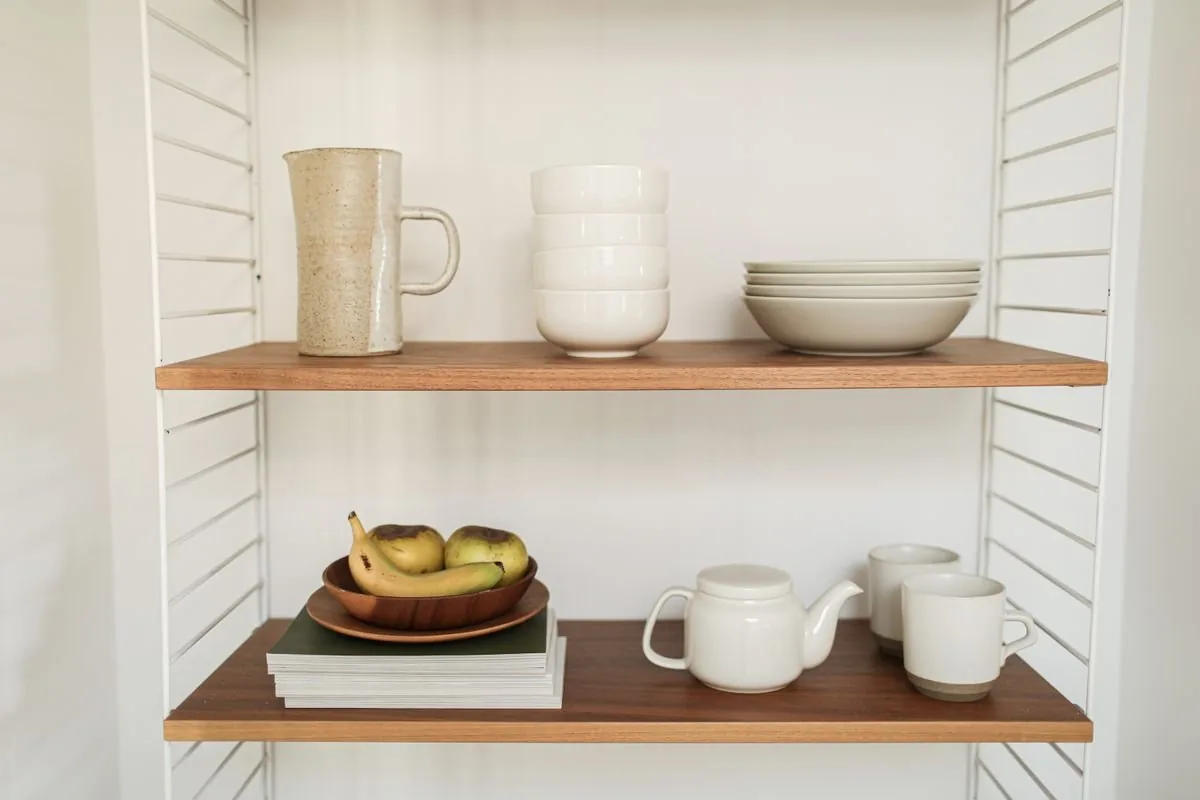
Solid oak, ash and walnut mark, and the marks become the surface rather than damage to it. A scratch can be sanded and re-oiled; a dent softens over time; the colour deepens. This is why old furniture in these timbers is still worth owning.
Veneer is a thin layer of real wood over engineered board. It looks like the real thing because it is the real thing, only about half a millimetre of it. Once the veneer is through at an edge or a corner, it is through, and there is no repair that does not show.
Neither is dishonest. Veneer is stable, it does not move with humidity, and it allows figured timbers that would be prohibitive in solid form. The problem is only that the label rarely makes the distinction plain and the price sometimes does not either.
How to tell in a showroom: look at an edge, particularly a corner where two faces meet. Solid timber shows grain running continuously round the corner. Veneer shows a seam, or a banding strip, or grain that stops. Then look underneath, where nobody spends money on presentation.
The other check is weight. Engineered board is heavy for its size in a dead, dense way; solid timber is heavy in a way that feels different once you have lifted both.
More in Materials
 MaterialsJudge a material at year five, not year oneThe useful question about any material is what it looks like after five years of people who are not being careful. Almost everything…
 MaterialsA room of smooth surfaces reads as flatA room can be well planned, well furnished and correctly lit and still feel like nothing. Usually the reason is that every surface i…
 MaterialsSheen matters more than the colourPeople agonise over the colour and accept whatever sheen the tin happens to be. The sheen level changes how a wall reads far more th…