 Notes on making a room work
Materials
Judge a material at year five, not year one
The useful question about any material is what it looks like after five years of people who are not being careful. Almost everything looks good new.
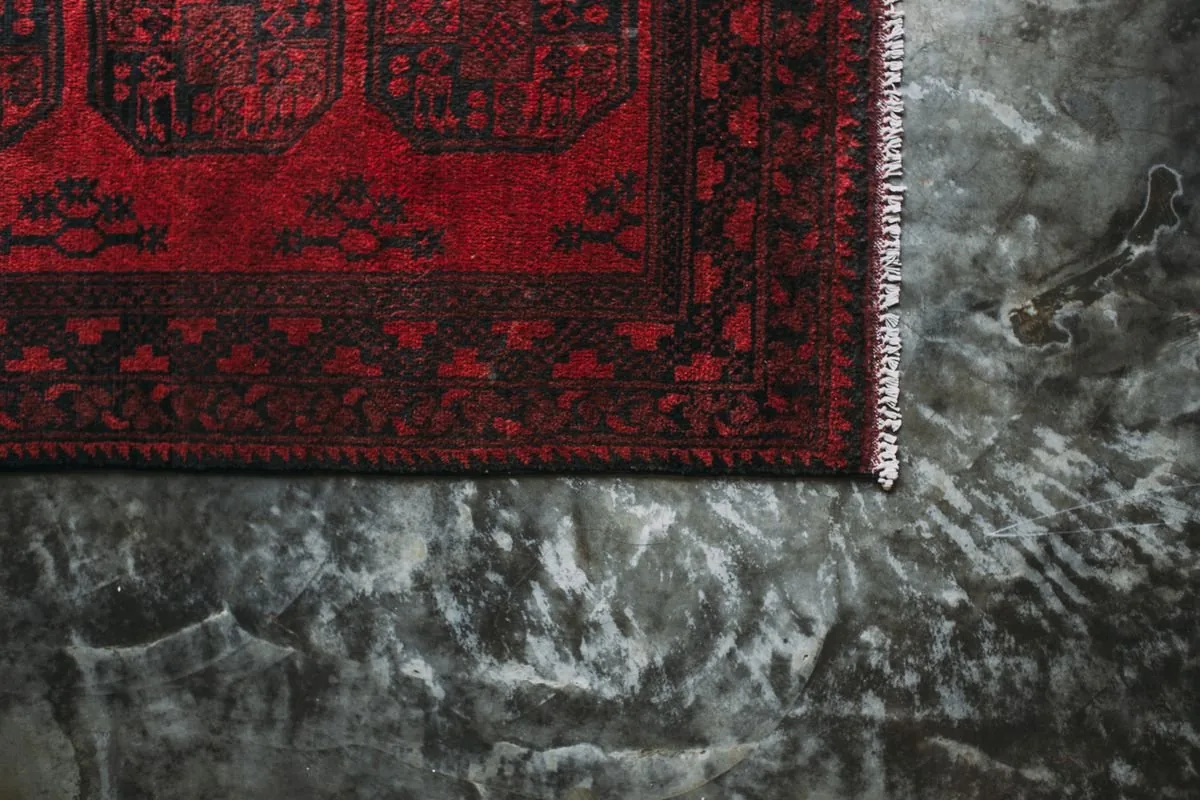
Wool is the clearest example. The fibre has a natural crimp, so it crushes under a foot and then recovers; a synthetic pile flattens along the traffic route and stays flat. A wool rug in a hallway will look better at year five than a polypropylene one did at year one. The Woolmark Company publishes the fibre research behind that if you want the technical version.
It also handles spills better than its reputation suggests, because the fibre is naturally water-repellent for long enough to blot a spill before it soaks in. The caveat is that it must actually be blotted rather than rubbed.
The cost calculation people do not run is per year rather than per purchase. A wool rug at three times the price that lasts four times as long is cheaper, and it looks better for the whole of its life rather than only the start.
Where synthetics do win is anywhere permanently wet or in direct sun. Bathrooms, conservatories and outdoor rooms are not the place for natural fibre, and a good synthetic there is the right answer rather than a compromise.
The general rule holds beyond rugs: choose things that age rather than degrade. Ageing produces patina, which is a surface. Degrading produces damage, which is not.
More in Materials
 MaterialsThe difference you cannot see from the frontSolid timber and veneered board can look identical when new. They behave completely differently over a decade, and the difference is…
 MaterialsA room of smooth surfaces reads as flatA room can be well planned, well furnished and correctly lit and still feel like nothing. Usually the reason is that every surface i…
 MaterialsSheen matters more than the colourPeople agonise over the colour and accept whatever sheen the tin happens to be. The sheen level changes how a wall reads far more th…